
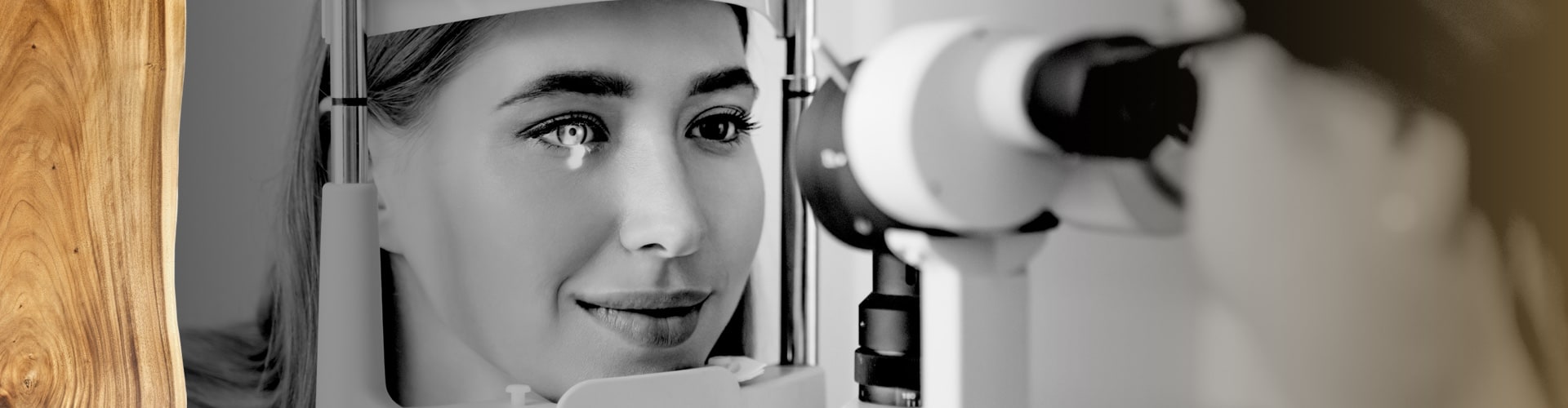

You’ve probably scrolled your phone late at night and noticed your eyes feel a bit tired afterward. That tired feeling gets blamed on blue light pretty often, so let’s look at what’s actually going on.
Blue light is just one part of the visible light spectrum, the range of colours your eyes can pick up. It sits near the higher-energy end, close to violet.
The sun actually gives off far more blue light than any screen you own. In fact, about one hour outdoors exposes your eyes to roughly the same amount of blue light as 24 hours in front of a computer. That means screens contribute only a small fraction of your daily blue light exposure.
Blue light glasses may help some people feel more comfortable during long hours on digital devices. While they aren’t a cure for digital eye strain, some people find they experience less visual fatigue by the end of the day when wearing blue-blocking lenses.
What Blue Light Glasses Do and How They Filter Light
Blue light glasses use a coating or tint that blocks a portion of blue wavelengths before they reach your eyes. Picture a screen door: it lets some light through while holding part of it back.
You’ll find 2 main styles:
- Clear lenses look like regular glasses and filter a smaller share of blue light.
- Tinted lenses carry a yellow or amber tone and hold back more, though they can change how colours look on your screen.
Do They Block All Blue Light?
No pair blocks everything.
Most filters only filter part of the blue wavelengths, and the amount changes from brand to brand. Two pairs that look identical on the shelf can filter very different amounts, so check the label instead of the price tag.
Curious how different pairs compare? Book an appointment and ask to see a few options side by side.
What Actually Causes Digital Eye Strain
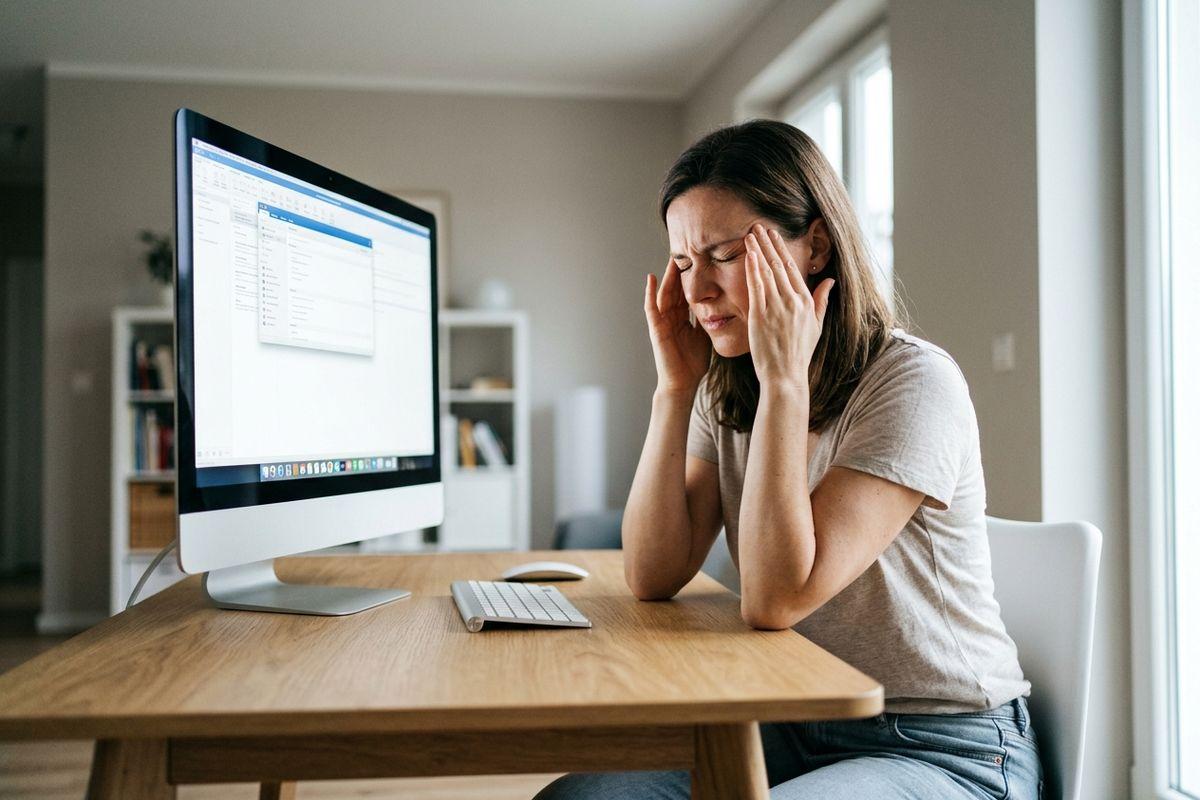
Eye strain after a long day at the computer usually comes from how you use screens rather than the amount of blue light they produce. Blinking less, focusing up close for long periods, and poor ergonomics are still the biggest contributors.
You blink far less when you stare at a monitor, and that leaves your eyes dry and scratchy. Focusing on something close for hours also tires the small muscles inside your eyes, similar to how holding a book up for too long tires your arms.
Blue light naturally scatters more than other colours of visible light, which can create a little extra glare. That’s one reason some people feel more comfortable wearing blue-blocking lenses, especially after long hours on a computer. Because blue light scatters more than other wavelengths of visible light, some people find that wearing blue-blocking lenses makes their eyes feel less fatigued by the end of the day. While the exact reason isn’t fully understood, reducing glare may play a role.
We’ve even seen this firsthand. Some members of our team have noticed that after switching to blue-blocking lenses, their eyes felt less fatigued at the end of long workdays. While that isn’t everyone’s experience, many patients tell us they notice a similar improvement.
Common Signs of Digital Eye Strain
Watch for these signs:
- Dry, watery, or tired eyes
- Headaches
- Blurry vision
- Sensitivity to light
If these show up often, book an eye exam with your optometrist to sort out what’s behind them.
Can Blue Light Glasses Help You Sleep?
Blue light in the evening tells your brain it’s still daytime. That signal lowers melatonin, the natural chemical that helps you feel sleepy.
Filtering some of that blue light in the evening may help some people wind down for sleep, especially when combined with healthy bedtime habits. Wear blue light glasses about an hour before bed, and you may ease into sleep a bit faster, though the lenses aren’t the whole story.
Your habits carry real weight here too. Keep your room dark, stick to a consistent bedtime, and cut back on screens before bed to support your rest just as much as any lens.
Simple Habits to Keep Your Eyes Comfortable
Small changes add up fast, and none of them cost you anything. Try these:
- Follow the 20-20-20 rule. Every 20 minutes, look at something 20 feet away for 20 seconds to relax your focus.
- Blink more often and sit about an arm’s length from your screen to cut down on dryness and strain.
- Book an eye exam with your optometrist to check what your eyes actually need.
Book Your Next Exam
Blue light glasses aren’t essential for everyone, but they can make a noticeable difference for some people, especially if you spend hours in front of digital screens. The best solution depends on your eyes, your work, and your daily routine. We’ll help you decide whether blue-blocking lenses are the right fit for your eyes, your work, and your daily routine.
For personalized advice and a clear picture of your eye health, Milton Vision & Sports Vision Training Centre can help you figure out what actually works for you.
Contact us today and book your next eye exam.