
Myopia, also called nearsightedness, affects vision at a distance. Reading a book or scrolling a phone feels fine, while the whiteboard across the classroom looks fuzzy. That difference is often what prompts a parent to book a child’s first eye exam.
Myopia happens when light entering the eye focuses in front of the retina instead of directly on it, usually because the eye has grown too long or the cornea curves too steeply, and family history, close-up work, and limited time outdoors all play a role.
What Happens Inside the Eye with Myopia
Light should land directly on the retina at the back of the eye. When the eyeball grows longer than average, or when the cornea (the clear dome at the front) curves too sharply, light comes to a point before it reaches the retina. Distant objects lose their crisp edges.
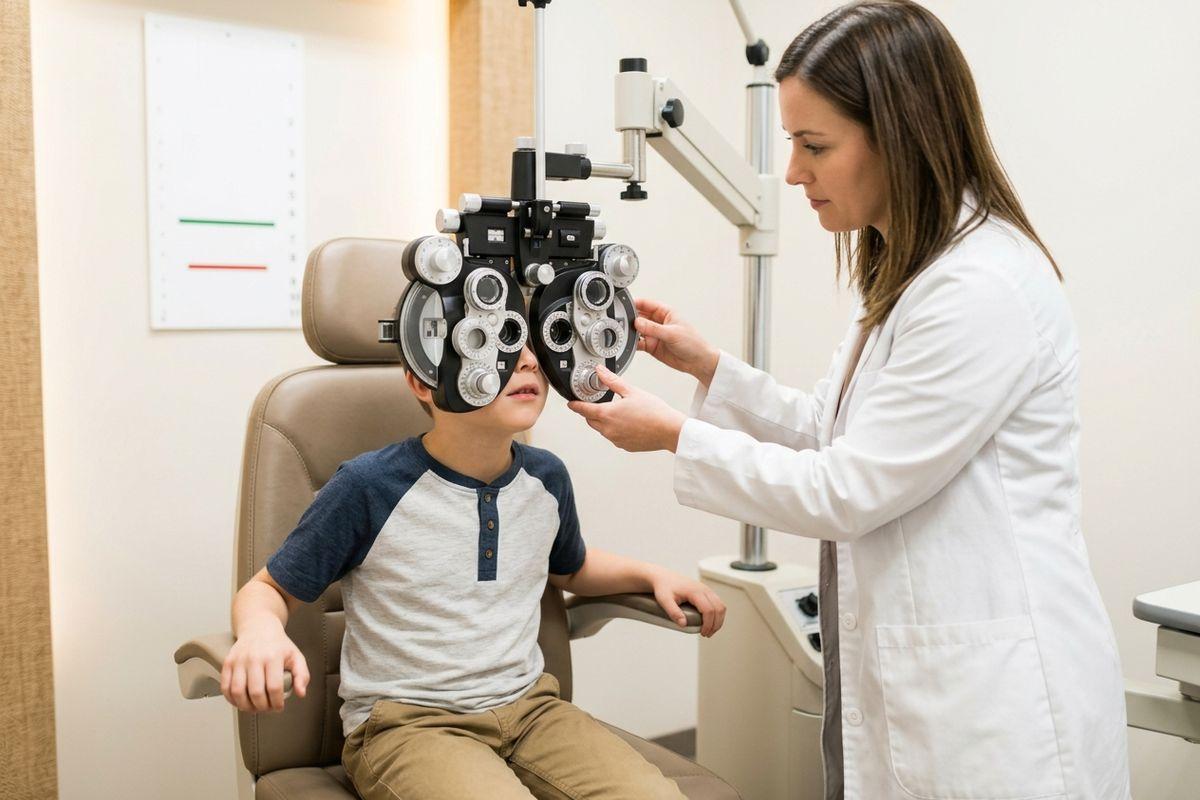
Prescriptions are written in dioptres, and a bigger number means light focuses even earlier. During an exam, we can measure the length of the eye and map the curve of the cornea, which tells us which one is causing the blurriness.
A steeply curved cornea can also cause astigmatism, where the surface curves unevenly and vision goes blurry at every distance instead of only far away. And plenty of people have both.
Main Risk Factors for Myopia
Several things make nearsightedness more likely, and a couple of them you can influence.
Family History
Myopia runs in families. If one parent is nearsighted, the risk increases for their children. When both parents are nearsighted, the risk rises even more.
Close-Up Work and Screen Time
Hours spent reading, playing tablet games, and scrolling on a phone keep the focusing muscles locked at one short distance, and some research links that kind of sustained near focus to higher rates of myopia in children. Homework and video calls add up fast over a term, and many parents know how difficult it can be to get a child to put the tablet down.
Limited Time Outdoors
Kids who spend less time playing outside show a greater risk of becoming nearsighted. Bright natural light seems to help regulate how the eye grows, and more outdoor time may delay when myopia shows up.
When Myopia Starts and How It Changes
Nearsightedness often begins in childhood, commonly between ages 6 and 14, when the eyes grow fastest. A prescription can change from one September to the next during that stretch, so an annual visit gives us something to compare against.
Progression usually slows in the late teens and early 20s. For many people, myopia steadies somewhere between ages 20 and 40.
Sudden Vision Changes in Adults
Distance vision that turns blurry out of nowhere, especially at night behind the wheel, deserves attention. Book an eye exam if oncoming headlights look smeared or highway signs come into focus later than they used to.
Signs of Myopia in Kids
Most children won’t tell you they can’t see the board. They assume everyone sees the world this slightly soft way, so they adjust by moving closer or quietly tuning out the lesson. Watch for a few of these at home:
- Squinting at the TV or the whiteboard at school
- Sitting very close to screens
- Asking to move to the front of the class
- Rubbing the eyes often
- Headaches after school or after a long workday
- Trouble reading road signs until they’re close
Can Habits or Exercises Reverse Myopia?
Nearsightedness doesn’t correct itself, and no exercise, supplement, or diet shortens an eye that has already grown longer. Myopia progression can be slowed using orthokeratology (special contact lenses worn while sleeping that allow for clear distance vision in the daytime without the use of glasses or contact lenses), special myopia control glasses or contact lenses, and specially prescribed low-dose atropine eye drops.
So if an ad promises to cure your nearsightedness with a 10-minute daily routine, keep scrolling.
Habits still matter for kids because the goal is to slow how fast the prescription changes. Build short breaks into homework time and guard weekend outdoor play like it’s an appointment.
How Your Optometrist Can Help
Your optometrist can measure how much myopia you have and walk you through your options. Glasses and contact lenses sharpen distance vision as soon as you put them on.
Myopia control works on a longer timeline. Specialty lenses, overnight orthokeratology lenses you take out in the morning, and low-dose atropine drops may all slow how quickly a prescription changes. Your optometrist can talk through which ones suit your child’s age and routine.
Regular exams track those changes, so a growing prescription gets noticed early rather than after a rough term at school. And clearer distance vision can make ordinary days easier, whether that’s reading the board or following a puck across the ice.
Where to Start with Myopia Care
Myopia is common, and it’s far less mysterious than it sounds. The earlier we see a child, the more we can do to slow prescription progression.
At Milton Vision and Sports Vision Training Centre, we take the time to explain what your results mean and what your options are, and we’re happy to answer the question you think is too small to ask. Book an eye exam today and get a clear picture of how your family is seeing.