Eye exams slip down the to-do list easily. Vision problems can feel like they’re waiting their turn until a menu gets harder to read or a child starts squinting at the whiteboard.
Timing depends on your age, your health, and how hard you work your eyes each day. Most people can plan on a comprehensive eye exam every 1 to 2 years. Kids need a tighter schedule than that, and adults over 65 do better with a yearly visit.
Eye Exam Frequency by Age
How often you should get an eye exam highly depends on your age.
How Often Kids Need an Eye Exam
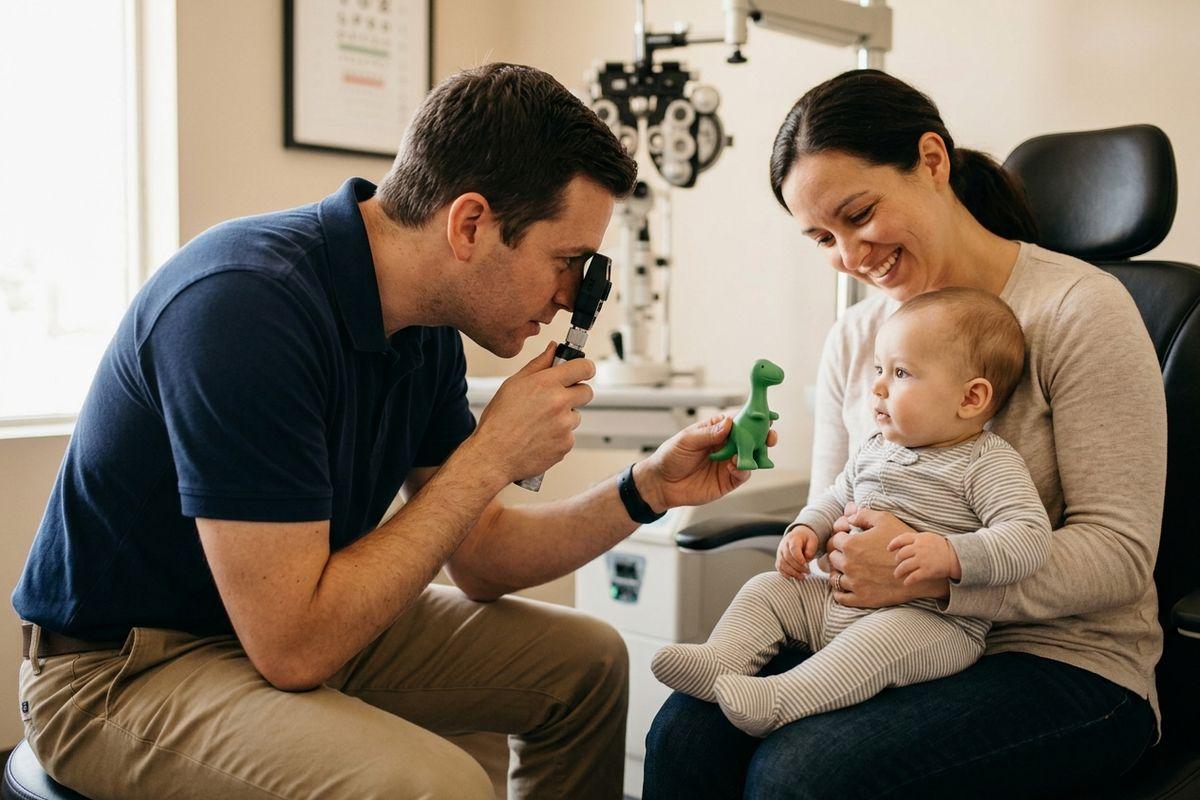
Eye care starts earlier than many parents expect. Book an infant’s first exam between 6 and 9 months of age, well before your child can read a letter chart.
Plan at least one more visit between ages 2 and 5, while depth perception and hand-eye coordination develop. An optometrist can spot a problem in one eye that the other eye quietly covers for.
Once school starts, move to booking yearly exams and keep that pattern through age 19. Reading and homework ask a lot of a young visual system, and focusing or tracking trouble often looks like a reading problem instead of a vision problem.
How Often Adults Need an Eye Exam
Between 20 and 64, book a comprehensive exam at least every 2 years. Make it yearly if a health condition needs closer monitoring.
Somewhere in your 40s, close-up focus starts to change. That’s presbyopia, and it helps explain why you may feel the need to hold your phone a little farther from your face each year. Reading glasses or an updated prescription can take care of it.
Eye Exams After 65
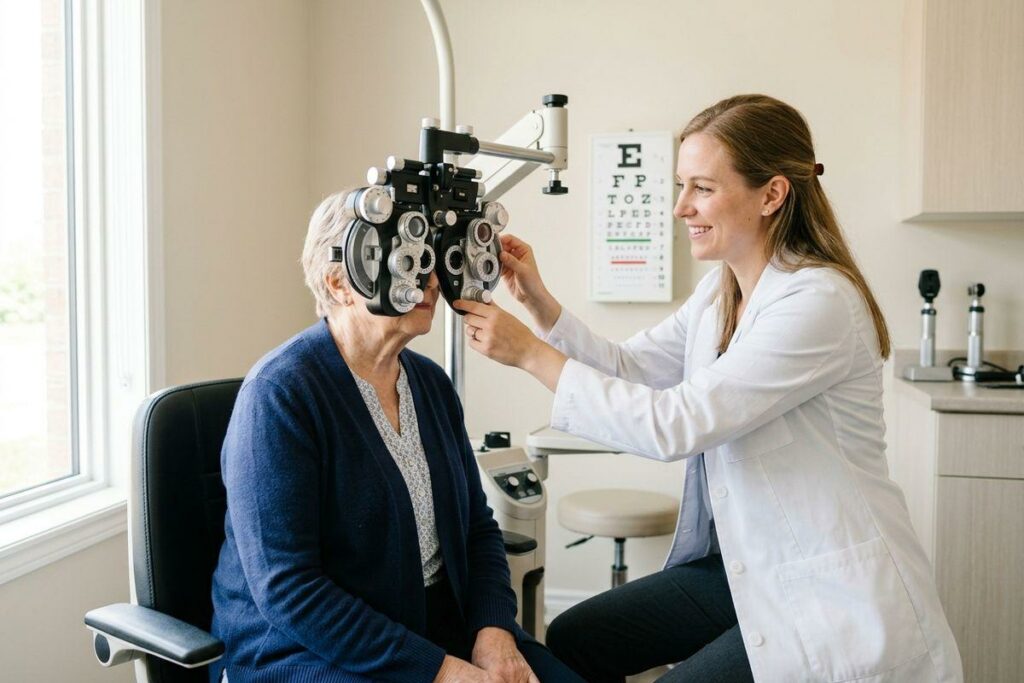
Once you hit 65, go yearly. Risk for age-related eye conditions climbs from here, and annual visits give your optometrist a record to measure each new result against.
You might notice more glare at night, or colours that look duller than they used to. Bring those details up at your appointment, even the ones that feel too small to mention. Some trace back to early changes in the lens.
Why You Shouldn’t Wait for Symptoms
Many eye conditions show no early signs at all. You can read fine, drive fine, and still have changes happening inside your eyes.
Glaucoma is the clearest example. It gradually damages the optic nerve, and most people notice nothing until a fair amount of peripheral vision is already gone.
Finding something at an early stage gives you and your optometrist more room to plan, which is the whole point of ongoing eye disease diagnosis and management.
Signs You Should Book an Eye Exam Sooner
A few changes are worth an appointment before your next scheduled visit:
- Blurry vision at any distance
- Headaches that show up after reading or screen work
- Eye strain or squinting through the afternoon
- New floaters or flashes of light in your side vision
- Sudden sensitivity to light
When You May Need Eye Exams More Often
A 2-year gap doesn’t suit everyone. Several things can move you onto a closer schedule:
- Diabetes or high blood pressure, since both affect the small blood vessels feeding the retina, which is why diabetic eye exams run yearly
- A family history of glaucoma or macular degeneration
- Long days on screens for work or school
- Contact lenses, which call for regular checks on fit and eye health
Athletes and Sports Vision
Sport asks more of your eyes than a letter chart does. Tracking a ball, shifting focus between near and far, and reacting quickly all play into performance.
Sports vision training can build on those skills once an optometrist measures your starting point.
What Happens During a Comprehensive Eye Exam
A full exam moves through a few steps, and each one adds to the picture of how your eyes work.
Your optometrist starts with your health history, your medications, and how you use your eyes day to day. Vision testing follows, along with a check of your current prescription.
Retinal imaging then shows the inside of your eyes in detail. Hard-to-notice conditions often show up here first, including cataracts, macular degeneration, and early diabetic damage. Signs of high blood pressure sometimes turn up too.
Wondering about cost? Check who qualifies for OHIP coverage before you go, since it depends on your age and health history.
Daily Habits to Support Your Eyes Between Visits
Look away from your screen every 20 minutes and focus on something about 20 feet off for 20 seconds. The 20-20-20 rule can ease the tired, dry feeling that builds through a long workday.
Wear UV-blocking sunglasses outdoors year-round. Winter counts, because snow bounces a surprising amount of light back at you. And keep sports eyewear in the bag for games and practices.
Wash your hands before you handle contact lenses, and replace them on schedule rather than stretching a pair an extra week.
Get the Whole Family on an Eye Exam Schedule
Booking everyone into the same afternoon turns 4 separate errands into 1 visit. Set a yearly reminder for the kids and for anyone past 65, and let your phone do the remembering.
Milton Vision and Sports Vision Training Centre cares for patients at every age, from a baby’s first exam to training for competitive athletes. Book your family’s next eye exam today.