Key Takeaways
- Reaction time is the gap between seeing something and moving your body.
- Physical fatigue and natural age shifts can slow your reflexes down.
- Simple daily habits like proper sleep and hydration help quicken your mind.
- Targeted visual drills can improve your coordination for sports and daily safety.
- Sports vision training can help evaluate and train your visual processing speeds.
Building Faster Reflexes
You can increase your reaction time by practising visual tracking drills, improving your sleep habits, and starting a targeted sports vision training program. Physical conditioning helps your brain process visual cues much faster so your muscles respond in time.
Our team at Milton Vision & Sports Vision Training Centre can help you evaluate these visual delays.
What Reaction Time Is & Why It Matters
The Basics of Quick Reflexes
Reaction time measures the time gap between seeing an object and moving your body. Quick reflexes have a number of benefits in many areas of life. These include:
- Responding to incidents while you’re behind the wheel
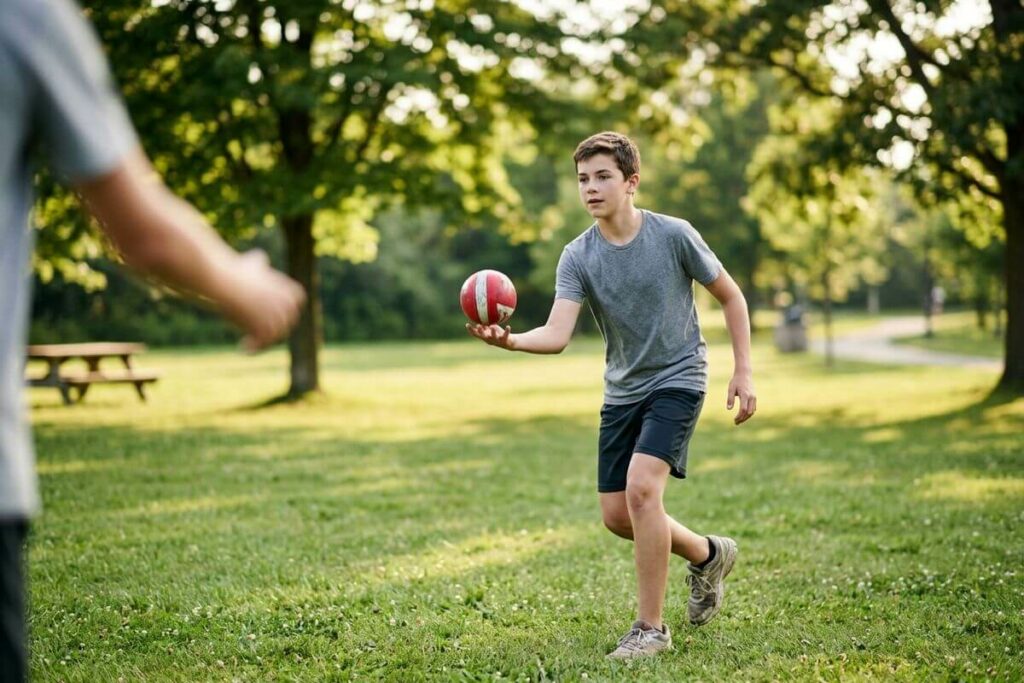
- Reacting quickly in your sport of choice
- Catching yourself from a sudden slip or fall
- Catching a dropped object like a plate before it hits the floor
Factors Affecting Reaction Time
Signs of Slower Reflexes
Signs of slower reflexes might include:
- Accidentally bumping into objects around your house
- Delayed reactions while playing sports
- Trouble catching dropped household items
Physical & Mental Factors
Mental fatigue slows down your daily brain signals, leaving you feeling sluggish. A tired mind processes information more slowly than a well-rested one. In some cases, recovering from a concussion can significantly delay your bodily reaction speeds. Natural age shifts can also alter reaction speed.
What’s an Average Reaction Time?
Average Human Response Times
A normal human reaction time is about 250 milliseconds for visual stimuli. This fraction of a second decides whether you catch a fast ball or let it slip past you.
Our brains process visual cues more slowly than auditory cues, so we react slower to something like a buzzer compared to, say, a flashing light. However, repeated practice does improve response times for specific tasks.

Simple Habits to Quicken Your Mind
You can make small changes at home to speed up your mental processing. Drinking 6 to 8 water glasses every day keeps your brain hydrated and alert. Adding proper eye nutrition to your diet can also support the health of your eyes.
Sleeping at least 8 hours every single night helps your mind recover from daily fatigue. You can also try limiting background noise to focus your attention totally on one task. Good visual hygiene before sports and other fast-paced activities can also support reaction time. Avoiding cell phone and tablet use for about 2 hours before play may help reduce visual fatigue and support better visual focus during activity.
Speeding Up Visual Responses
Physical activity conditions your body for faster visual responses. By practicing your agility and rehearsing common situations in your sport of choice, you can condition your muscle memory and reflexes, thereby effectively increasing your response time.
At Milton Vision, we also offer sports vision training to improve visual skills like hand-eye coordination and reaction time. Our personalized process will assess your visual strengths and weaknesses and develop a plan for improving your abilities.
Reach out to our team to help sharpen your visual reflexes for all your daily activities.