
Key Takeaways
- Family history increases your chance of developing glaucoma.
- Early stages usually don’t have obvious symptoms.
- Routine eye exams can help eye doctors detect issues before damage happens.
- You can protect your eyes with healthy habits and regular visits to your eye doctor.
You might wonder why our team at Milton Vision & Sports Vision Training Centre always asks about your parents or grandparents during a visit, and that’s a fair question. The reason we ask is that knowing your family’s health history helps our eye doctor look for specific eye conditions.
Glaucoma has a strong genetic connection and can run in families. That doesn’t mean you are destined to have glaucoma: It just means that your own risk increases. Early detection during routine adult eye exams can help protect your vision for years to come.
The Link Between Family History and Glaucoma
How Genetics Affect Eye Pressure
Genes passed down from your parents can affect many things, including how fluid drains from your eyes. Over time, poor drainage can create extra pressure against your optic nerve, which can damage those sensitive fibres.
Your risk does increase when the condition runs in your family. So if you have a parent or sibling with the condition, it means you might want to consider closer monitoring. During routine eye exams, our optometrist can monitor your intraocular pressure (the pressure inside your eye) to detect any gradual changes before damage occurs.
Types of Glaucoma
There are 2 common types of glaucoma. Primary open-angle glaucoma tends to develop slowly, without symptoms in the early stages. Your vision might look completely normal to you, but over time, the pressure can build and contribute to damage. This kind of glaucoma often runs in families.
There is also acute angle-closure glaucoma, which is closely linked to the inherited shape of your eyes. With this type, a narrow drainage angle suddenly blocks fluid flow, so damage occurs quickly and with noticeable symptoms. This physical trait can easily be passed from generation to generation.
Common Risk Factors to Watch For
Age and Background
Your risk of glaucoma does increase after you reach age 40. This is because your eyes change as you get older, making regular eye exams very beneficial during these decades.
Certain cultural backgrounds can also carry a higher risk. Some populations, including people of African, Asian, or Hispanic descent, may face a higher risk of certain types of glaucoma.
Overall Health Habits
Conditions like high blood pressure or diabetes can directly impact your overall health, including your eyes. Regular diabetic eye exams help support your sight because high blood sugar can damage the tiny blood vessels that nourish your optic nerve.
Past eye injuries can also increase your chances of pressure problems over time. A trauma to the eye during a hockey game or tennis match, for example, can change the internal drainage structure.
Thin corneas (the clear outer layer of your eye) add another layer of risk to your vision. A thin front eye surface can make pressure readings seem lower than reality.
Early Signs and Symptoms of Glaucoma
Silent Early Stages
You may not notice any changes to your vision in the early stages of glaucoma. With open-angle glaucoma, structural changes happen slowly before you notice a difference in your sight.
Early detection often relies on professional glaucoma testing rather than your own observations. The optic nerve, which sends information to your brain, can be damaged before your eyes show any signs of trouble.
Physical Signs to Notice
Some types present sudden warnings. A quick visit to the eye doctor can help protect your vision if you notice these specific physical signs:
- Sharp eye pain or vision changes
- Blurry vision or rainbow halos around bright lights
- Unusual headaches combined with eye redness
Steps to Protect Your Eyesight
Routine Eye Exams
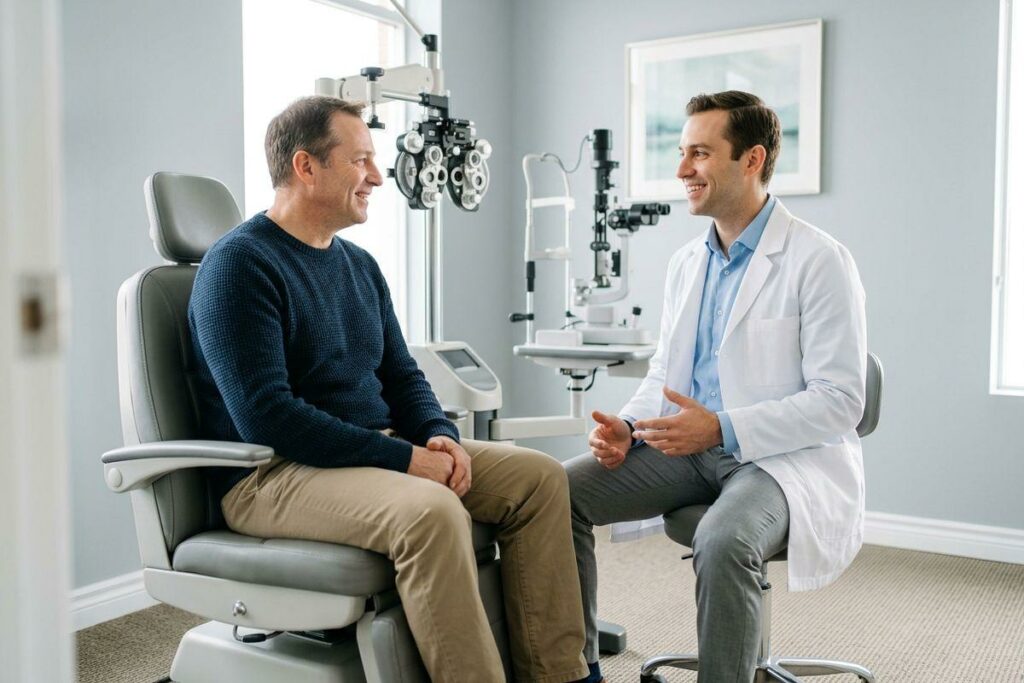
Annual checks help the eye doctor spot tiny structural changes early on. Specialized equipment used during a comprehensive eye exam can “map” your optic nerve to find early signs of damage.
We recommend you share your complete family history with your eye doctor in Milton. This information helps our team build an accurate timeline for your ongoing care.
Proactive Health Choices
You can protect your eyes by keeping your blood pressure at healthy levels and eating a well-balanced diet full of fruits and vegetables. We also often recommend staying consistent with appointments to the optometrist, as this gives you a better chance at catching glaucoma early, when treatments are often more effective.
Care and Management Options
Daily Maintenance
Getting a glaucoma diagnosis doesn’t have to mean you’ll lose your sight. There are many care options available to manage the disease and keep you doing your favourite activities. The eye doctor can prescribe daily medicated eye drops to manage your condition, which help regulate fluid and lower internal eye pressure.
Medical Procedures
There are also medical procedures that may be recommended depending on your specific needs. For example, laser therapies can improve your eye’s fluid drainage pathways, helping release pressure.
Schedule Your Preventive Eye Exam
Regular eye exams can help keep your treatment plan on the right track. Milton Vision & Sports Vision Training Centre offers personalized attention, providing unique sports vision solution training along with regular family eye care. If you’re looking to discuss your long-term eye health, book your visit today.nalized attention and answer your questions. Schedule a comprehensive eye exam today to learn more about protecting your sight.